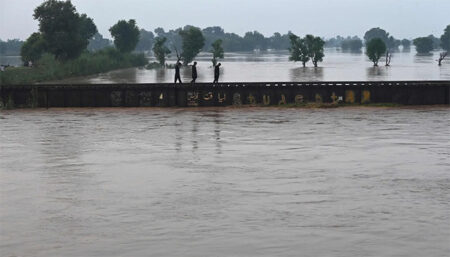
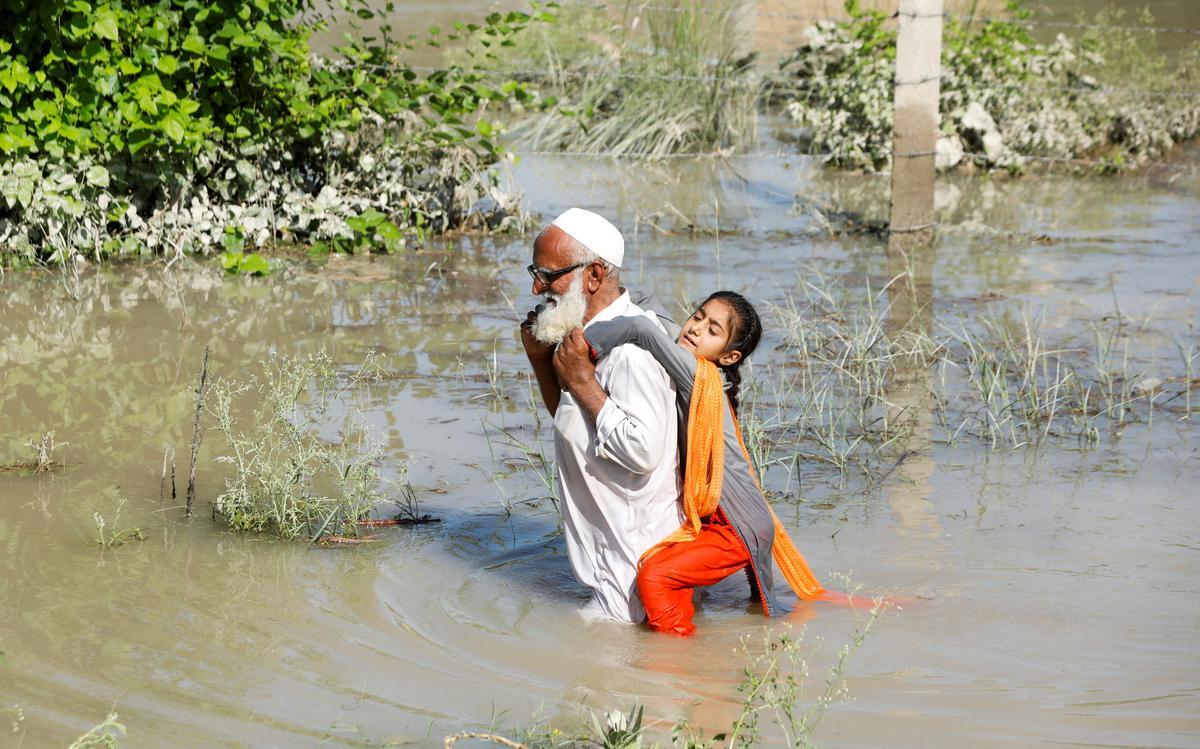
Geneva: After 8 weeks of continuous rain, a small sea has formed on the land of Pakistan. In this context, the Chief of the United Nations has described the Pakistani rains and floods in Pakistan as a climate-related tragedy.
The reason for this has been attributed by experts to more than normal monsoon system and El Niña phenomenon. After that, rain continued for 8 consecutive weeks in different parts of the country.
First, the flood situation in Balochistan became the cause of death, then Sindh and then the flood caused havoc in South Punjab. Swat and Quetta were flooded at the same time and now one-third of the country is under water.
So far, 1100 people, including hundreds of children, have been killed by the flood, while a financial loss of ten billion dollars has been done. Antonio Guterres said international cooperation and collaboration is needed on “this climate disaster”.
In a video message, the UN chief said, “Pakistan is reeling in suffering, as if the monsoon has become too powerful, resulting in rain and floods.” He said on this occasion that the international community should help Pakistan.
Pakistan is facing severe floods after 2010. According to the ‘Global Flood Network’ associated with the European Satellite Monitoring System, the worst damage has occurred in South Pakistan. It has been said on the website of the European Meteorological Satellite Network ‘Copernicus’ that on August 26, 10 times more than normal monsoon intensity was recorded in Pakistan.
On the other hand, Climate Change Minister Sherry Rehman has said that 1700 mm of rain has fallen in one day in Pind Dadan Khan. He has repeatedly described the recent floods as a humanitarian tragedy and crisis.
It should be noted that Pakistan is among the countries most affected by climate change. Droughts, heatwaves, heavy rains and all the phenomena of climatic extremes have been observed here. Even a few months ago the mercury touched 51 degrees Celsius in Jacobabad.