
Pakistan’s Petroleum Demand Shrinks
Pakistan witnessed a significant drop in the demand for petroleum products, with a decline of 21.9% during the July-March period of the current fiscal year, according to the Pakistan Economic Survey 2022-23.
Energy experts attribute the weak demand to rampant smuggling of petroleum products from Iran, sluggish economic activities, restrictions on importing due to limited Letters of Credit availability, and surging oil prices.
The prices of petroleum products reached an all-time high in Pakistan’s history during the recently concluded financial year 2022-23.
The influx of smuggled Iranian petroleum products flooded the local market, compelling domestic oil refineries to reduce production as consumer demand contracted.
As per the Economic Survey presented by Finance Minister Ishaq Dar, the overall demand for petroleum products declined by 21.9% to 13.1 million tonnes in the first nine months (July-March) of FY23, compared to 16.7 million tonnes in the same period of FY22. The total demand for the last fiscal year was 23.1 million tonnes.
This downward trend can be attributed to a decrease in the demand for furnace oil, high-speed diesel (HSD), motor spirit (petrol), and high octane blended component (HOBC), which collectively account for over 95% of the total demand.
However, jet fuel (JP-1 and JP-8) experienced an increase in consumer demand, growing by 18% during the review period.
The major consumers were the transport and power sectors, accounting for approximately 90% of the total demand.
The decline in motor spirit and HSD consumption can be attributed to high prices, while the decrease in furnace oil usage resulted from power generation plants shifting to re-gasified liquefied natural gas (RLNG)/coal and other alternative sources.
As a net importer of petroleum products and crude oil, Pakistan imported 6.1 million tonnes of oil products worth $5.7 billion during July-March FY23. The imports included 3.85 million tonnes of motor spirit, 1.64 million tonnes of HSD, and 530,000 tonnes of furnace oil. The reliance on furnace oil for power generation decreased, with only 530,000 tonnes imported compared to 1.32 million tonnes in July-March FY22.
Refineries’ crude oil import requirement remained at 5.86 million tonnes, down from 6.8 million tonnes the previous year.
Gas Sector
Indigenous natural gas supply contributed approximately 29.3% (FY21) to Pakistan’s total primary energy mix.
The country has an extensive gas network comprising 13,775 km of transmission pipelines, 157,395 km of main pipelines, and 41,352 km of service pipelines, catering to the needs of over 10.7 million consumers.
The average natural gas consumption during July-March FY23 was around 3,258 million cubic feet per day (mmcfd), including 631 mmcfd of RLNG.
In the same period, the country’s two gas utilities, Sui Northern Gas Pipelines Limited and Sui Southern Gas Company, expanded,674 million in transmission projects, Rs47,700 million in distribution projects, and Rs9,416 million in other projects, bringing the total investment in FY24 to Rs95,790 million.
Electricity
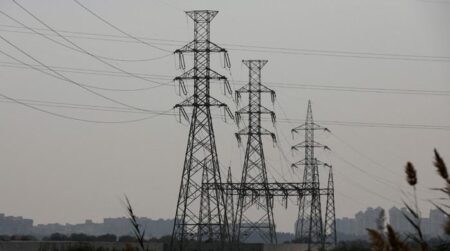
Pakistan’s total installed electricity generation capacity currently stands at 41,000 megawatts, with hydel power accounting for 25.8%, thermal power 58.8%, nuclear power 8.6%, and renewable sources contributing 6.8%.
The share of thermal power, as the dominant source of electricity, has decreased in recent years, indicating an increased reliance on indigenous energy sources.
In terms of electricity generation, hydel, nuclear, and renewable sources collectively accounted for 53.8% of the total generation of 94,121 gigawatt-hours (GWh), which is a positive development for the economy and the environment, as stated in the Economic Survey.
Power Consumption
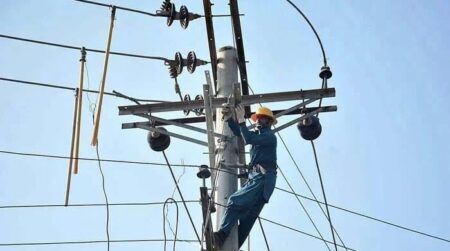
During July-March FY23, the total electricity consumption amounted to 84,034 GWh. The household sector was the largest consumer, accounting for 46.6% (39,200 GWh), followed by the industrial sector at 28.2% (23,687 GWh).
Additionally, the agriculture and commercial sectors consumed 8.2% (6,906 GWh) and 7.8% (6,576 GWh), respectively, while other sectors (streetlights, general services, and other government) consumed 9.1% (7,664 GWh) of the electricity.
Mineral Sector
In July-March FY23, the power sector consumed about 47.3% (7.29 million tonnes) of coal, while the cement and other industries consumed 31.1% (4.80 million tonnes). Brick kilns accounted for 21.5% (3.32 million tonnes) of coal consumption.
Key Points
Here are some of the key points from the article:
- The demand for petroleum products in Pakistan declined by 21.9% in the first nine months of fiscal year 2022-23.
-
This decline was driven by a number of factors, including:
- Smuggling of petroleum products from Iran
- High prices
- A shift to alternative energy sources, such as re-gasified liquefied natural gas (RLNG) and coal
-
The decline in demand for petroleum products has had a number of negative implications for the Pakistani economy, including:
- Reduced government revenue from taxes on petroleum products
- Increased reliance on imports of petroleum products
- Increased pressure on the country’s foreign exchange reserves
The article concludes by calling for the government to take steps to address the decline in demand for petroleum products. These steps could include:
- Cracking down on smuggling
- Reducing taxes on petroleum products
- Investing in alternative energy sources
The decline in demand for petroleum products is a serious challenge for the Pakistani economy. The government must take steps to address this challenge in order to protect the country’s economy and its people.
Published in PakWeb, June 9th, 2023.
Stay informed and engaged with the PakWeb by following us on Facebook, Twitter, and participating in our Discussion Forums.