Government Aims to Raise $2 Billion through Eurobonds
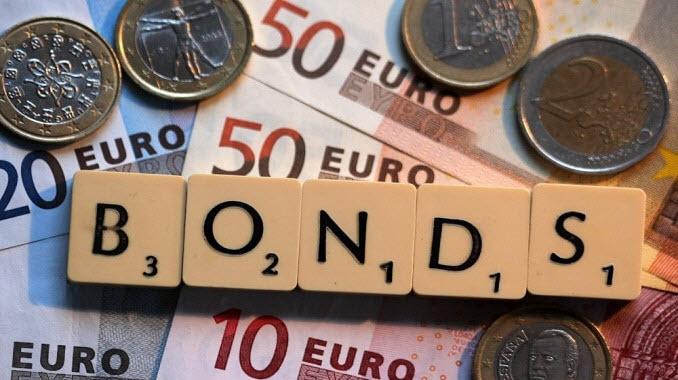
In light of uncertain foreign loan disbursement projections and the absence of an International Monetary Fund (IMF) deal, the government has announced plans to generate $2 billion by issuing Eurobonds in the upcoming fiscal year.
With the lack of clarity regarding the IMF agreement, it is estimated that inflows from multilateral and bilateral creditors will amount to only $6.2 billion in the next fiscal year, a decrease of nearly 30% compared to the original estimate for this year.
The projection of $6.2 billion excludes any inflows from Eurobonds, commercial loans, and the IMF loan.
Sources within the Ministry of Finance have revealed that the government is reconsidering the idea of raising $2 billion through Eurobonds during the fiscal year 2023-24.
However, the government’s attempts to secure financing from capital markets in the current fiscal year proved unsuccessful due to Pakistan’s unfavorable credit rating given by three major international rating agencies.
For Pakistan to enter the capital markets, it must regain the trust of the IMF. Without an IMF agreement, acquiring new foreign commercial loans and issuing sovereign bonds would become challenging.
In the current fiscal year, Pakistan anticipated receiving $3 billion from the IMF, but only $1.2 billion has been received thus far.
Sources indicate that during a recent phone conversation between Prime Minister Shehbaz Sharif and IMF Managing Director Kristalina Georgieva, the idea of extending the $6.5 billion loan program was proposed. However, the IMF informed the premier that further extension for the current program, set to expire on June 30, was not possible.
The Ministry of Finance is currently working on two scenarios for the next fiscal year: one with IMF projections and another without IMF projections for foreign inflows.
In the absence of an IMF agreement, the anticipated inflows would be insufficient, prompting the government to rely on China as a key player.
The realistic assumption is that China can refinance $3.5 billion in foreign commercial loans and provide an additional $4 billion from the State Administration of Foreign Exchange (SAFE) deposits. Pakistani authorities, however, express the desire to obtain additional loans from China.
Without the IMF agreement, the combined foreign loan disbursements from multilateral and bilateral creditors are estimated at $6.2 billion, which falls short of meeting the growing financing needs.
The government expects to receive $5.3 billion from multilateral lenders in the next fiscal year, $2.3 billion less than the original estimate for this year.
As for loans from the World Bank, Pakistan plans to secure $2.3 billion in the next fiscal year, compared to the original estimate of $2.6 billion for this year.
Additionally, the country anticipates inflows of $2 billion from the Asian Development Bank (ADB) in the next fiscal year, a decrease from the $3.2 billion expected in the current fiscal year.
In the outgoing fiscal year, the government budgeted $1.2 billion in short-term debt from the Islamic Development Bank (IDB). However, for the next fiscal year, the projection has been reduced to $500 million.
Similarly, Pakistan received $579 million from the Asian Infrastructure Investment Bank (AIIB) in the current fiscal year. In the next year, the country expects inflows of $361 million from the AIIB.
In terms of bilateral creditors, inflows are estimated at only $890 million for the fiscal year 2023-24, compared to the $1 billion estimate for the current fiscal year. Out of the $1 billion, $600 million is projected to come from Saudi Arabia as deferred oil payments, with Chinese disbursement expected to be less than $20 million.
Official data reveals that foreign loan disbursements from July to April 2023 amounted to $8 billion, indicating a significant decline of $4.8 billion or 38% compared to the same period in the previous fiscal year.
These disbursements have proven to be inadequate in financing the maturing foreign debt, resulting in a substantial decrease in the country’s foreign exchange reserves, which currently stand at a mere $4 billion.
The primary reason behind the low disbursement is the government’s failure to ensure the timely completion of the ninth review of the IMF program. As a result, the received $8 billion represents only 35% of the annual budget estimate of $22.8 billion.
To address this challenging situation, the government is turning its focus towards raising $2 billion through Eurobonds in the next fiscal year. While alternative financing options are being explored, such as securing additional loans from China, regaining the trust of the IMF remains crucial for Pakistan’s ability to access capital markets and meet its growing financing needs.
Stay informed and engaged with the PakWeb by following us on Facebook, Twitter, and participating in our Discussion Forums.